
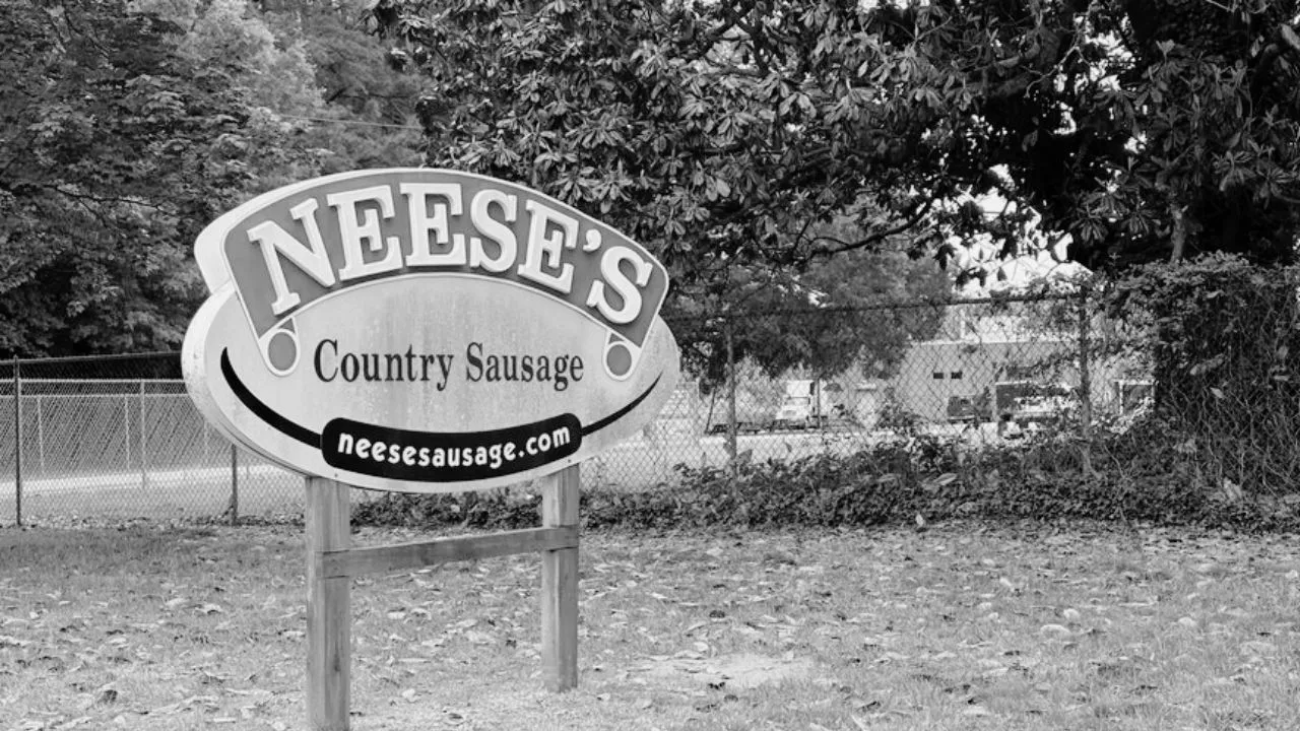
Customers across North Carolina started noticing empty shelf space where Neese’s sausage used to sit. Then came the Google search showing “permanently closed.” For a brand with over 100 years of regional history, that combination felt like a gut punch.
But the full picture is more complicated — and more hopeful — than those signals suggested. Here is a clear breakdown of what actually happened, from the USDA action to the ownership change and plans to bring products back.
A Brief Look at Neese’s Sausage and Its Place in North Carolina
Neese’s has been a fixture in North Carolina kitchens for generations. The company was incorporated as Neese’s Country Sausage, Inc. in 1947 and has been headquartered in Greensboro ever since. The Neese family ran the operation for decades, building a loyal following across grocery stores and restaurant kitchens throughout the Carolinas.
The product lineup goes beyond standard breakfast sausage. Neese’s also produces liver mush and liver pudding — regional staples that don’t have a clean mass-market substitute. For longtime customers, these aren’t just convenient grocery items. They’re tied to breakfast traditions and local identity.
That deep regional loyalty is exactly why the disappearance of Neese’s products hit so hard. When something that familiar vanishes without explanation, people notice quickly.
Why Neese’s Products Disappeared From Store Shelves
By late 2025 and into early 2026, customers and foodservice operators were reporting the same thing: Neese’s products were gone. Grocery store staff said shipments had stopped. The company website went offline. Google listed the business as “permanently closed.”
Those signals combined to create widespread speculation that Neese’s had shut down for good. The actual cause, however, was regulatory — not financial collapse or a voluntary closure.
In September 2025, the USDA’s Food Safety and Inspection Service (FSIS) issued a Notice of Suspension targeting a portion of the Greensboro facility. Specifically, it applied to ready-to-eat production processes. The suspension was tied to noncompliance with 9 C.F.R. § 430, the federal regulation that governs Listeria monocytogenes controls in ready-to-eat meat and poultry products.
It is worth being precise here: the suspension was partial. It was not a full-facility shutdown ordered by the government, and no confirmed consumer illness outbreak was reported. The issue was regulatory noncompliance in a specific area of production — serious, but different from the worst-case scenario many readers imagined.
Think of it the way you might think about a restaurant health inspection. A critical violation can force a kitchen to halt specific operations until the problem is corrected and a re-inspection is passed. Neese’s faced something structurally similar at its facility.
How a Partial Suspension Became a Full Production Halt
Here is the detail that most coverage missed: the full production pause was not the result of a second or escalating government order. It happened because of what Neese’s did not do.
Under federal rules, a meat processing facility cannot legally produce products without USDA inspectors physically present on-site. After the September 2025 suspension, Neese’s did not request FSIS inspectors to return to the affected area. Without that request, production could not legally resume — anywhere in the facility.
By early 2026, USDA confirmed that production at the Greensboro plant was fully paused. Spokespeople were explicit: there was no additional suspension order. The halt resulted from the company not taking the steps needed to restart. Local reporting noted visible activity at the plant, which indicated it had not been physically abandoned — but nothing was being produced.
The company also issued no public statements during this period. That silence, combined with the offline website and empty shelves, created a vacuum that rumors quickly filled.
The Corporate Name Change That Preceded the Sale
Before the production issues became public, a quieter change was already underway. In 2024, the company formally changed its registered business name from Neese’s Country Sausage, Inc. to NCS Enterprises, Inc. — the first name change since incorporation in 1947.
At the time, it did not attract much attention. In hindsight, it signaled that the business was already in transition. The name change preceded growing concerns about whether the Neese family could sustain independent operations given the regulatory pressures and capital demands that small meat processors increasingly face.
Family-owned food manufacturers often reach a point where upgrading facilities, maintaining compliance, and staying competitive become difficult without outside investment or a larger partner. The name change, viewed alongside what followed, appears to reflect exactly that kind of inflection point.
The Acquisition: Jesse Jones Steps In
In June 2026, the situation came into focus. Raleigh-based Jesse Jones Food Company, owned by the White family, announced it was acquiring the Neese’s brand and its products.
Jesse Jones is itself a well-established North Carolina meat company. The acquisition represents a transition from one family-owned regional brand to another — not a sale to a national conglomerate looking to retire the name or replace the product line.
Both companies framed the deal as a way to preserve Neese’s recipes and bring its products back to the market. A press release described the acquisition as a path to ending “months of limited availability,” with Neese’s sausage, liver mush, and liver pudding expected to return to store shelves and restaurant kitchens across the region. A newly redesigned Neese’s website has already launched under the new ownership.
This kind of transaction is not unusual in the food industry. When a founding family can no longer maintain operations — whether due to regulatory challenges, capital requirements, or succession issues — a neighboring or complementary brand sometimes steps in to keep the product alive. It is brand preservation through acquisition, not extinction.
What Consumers Should Expect Going Forward
The new ownership brings both changes and continuities that shoppers and foodservice operators should be aware of.
What Is Likely to Change
- Management and corporate structure will shift to the White family and Jesse Jones operations.
- The facility setup and food safety systems will need to meet USDA requirements before full production resumes.
- Where the products are manufactured — whether in Greensboro, at Jesse Jones facilities, or some combination — has not been fully detailed in public reporting yet.
What the New Owner Is Emphasizing
- Neese’s recipes and brand identity are intended to carry forward.
- The same core products — sausage, liver mush, liver pudding — are expected to return to regional markets.
- The new website reflects an active relaunch effort, not a wind-down.
It is reasonable to expect some adjustment period. Restarting production after a USDA compliance issue requires corrective actions, re-inspection, and logistical coordination. Exact return dates have not been publicly confirmed, so consumers should monitor the new Neese’s website and local news for updated stocking timelines.
Restaurants that switched to alternative brands during the production pause will need to decide whether to transition back once supply is reliable again. That decision will likely depend on price, availability, and how quickly Neese’s can rebuild consistent distribution.
What This Story Tells Us About Small Food Manufacturers
The Neese’s situation is not isolated. Small and mid-sized meat processors across the country face the same pressures: tightening federal food safety standards, aging facilities, rising compliance costs, and the challenge of generational ownership transitions.
Meeting USDA FSIS requirements — particularly around Listeria prevention for ready-to-eat products — requires ongoing investment in equipment, processes, and documentation. For a family-run operation without the capital reserves of a large food company, a single compliance failure can quickly cascade into a full production halt.
For readers interested in how regulatory compliance affects business continuity, resources like Next Business Tips cover these dynamics across a range of industries, including food and manufacturing.
Neese’s brand loyalty, built over more than a century, is ultimately what made this acquisition possible. Without that consumer connection, there would be little incentive for a buyer to step in. The brand’s heritage became its most valuable asset when operations faltered.
The Bottom Line
Neese’s Sausage is not going out of business. The original family-operated company faced a serious USDA compliance issue in September 2025, which led to a full production halt by early 2026. The company’s silence and offline presence created a reasonable but inaccurate impression that the brand had permanently closed.
In June 2026, Jesse Jones Food Company — a North Carolina family-owned business — acquired the Neese’s brand with stated plans to restart production and return products to store shelves. The brand name, recipes, and product lineup are expected to continue under new stewardship.
The road back will take time. But for customers who have been searching empty shelves or refreshing the Neese’s website, the core answer is this: the brand survived, and it is working its way back.
Also Read: