
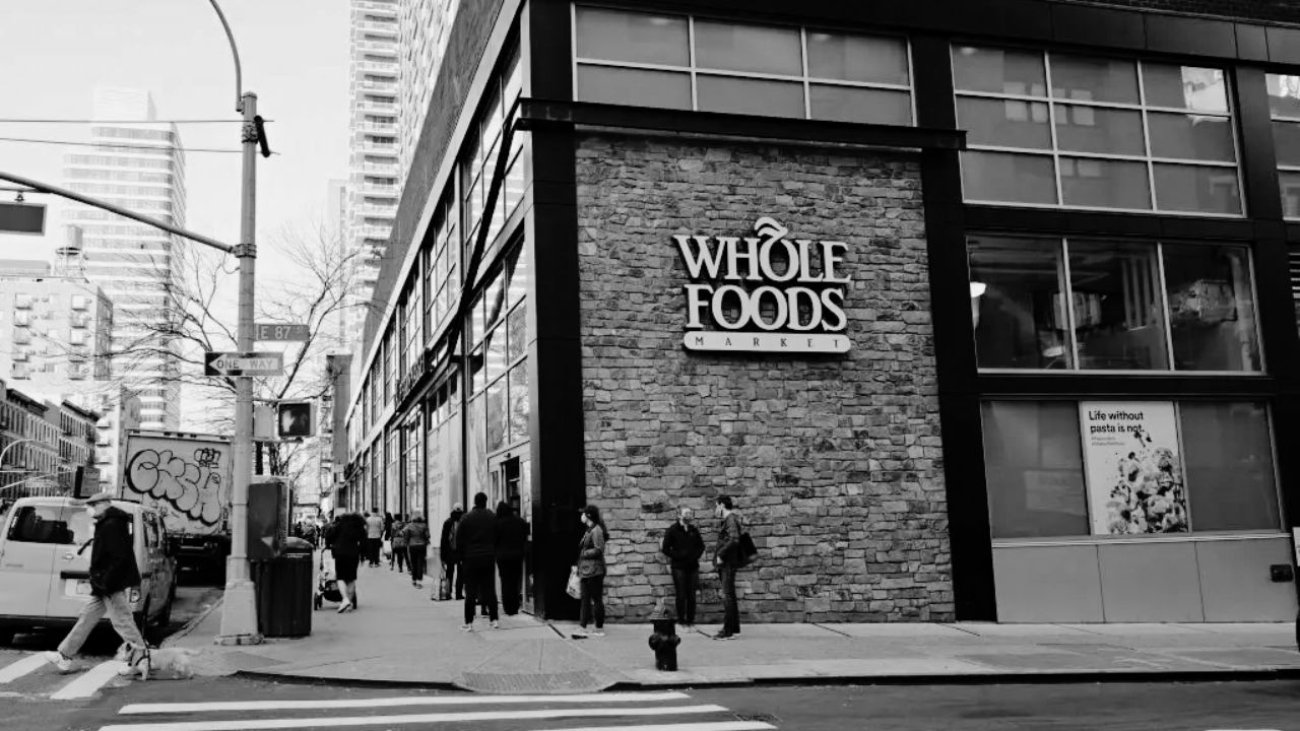
Headlines about Whole Foods store closures have been circulating for years. And every time a new one appears, the same question follows — is the entire chain in trouble?
The short answer is no. But the longer answer is worth understanding, especially if you live near a store that has closed or you rely on Whole Foods regularly.
This article explains what is actually happening with Whole Foods, why certain stores have closed, what Amazon’s grocery strategy means for the brand going forward, and what customers and employees should realistically expect.
Whole Foods Is Not Going Out of Business
Let’s be direct about this. Whole Foods has not announced a company-wide shutdown. No credible report suggests the chain is facing imminent collapse or bankruptcy.
As of now, Whole Foods operates more than 500 stores across the United States, Canada, and the United Kingdom. Individual store closures have occurred, but they represent a small fraction of the overall chain.
Closing a low-performing location is not the same as shutting down a business. Think of it like a bank closing a branch in a slow neighborhood while keeping hundreds of others open. The institution is not failing — it is making a business decision about one specific site.
Market Realist confirmed that Whole Foods has not made any announcement about a chain-wide shutdown. The closures that have generated headlines are localized decisions, not signs of corporate collapse.
A Brief Look at Whole Foods and the Amazon Acquisition
Whole Foods Market was founded in 1980 in Austin, Texas. It grew into the leading natural and organic grocery chain in the United States, building a reputation for high-quality products and premium pricing.
In June 2017, Amazon acquired Whole Foods for $13.7 billion. Since then, the two companies have been closely integrated. Amazon Prime members receive discounts at Whole Foods, and the chain is deeply connected to Amazon’s delivery and online ordering infrastructure.
This ownership structure matters when interpreting recent decisions. Whole Foods does not operate as a fully independent business anymore. Its store openings, closures, and format changes are tied to Amazon’s broader retail and grocery strategy. That context is essential to understanding what is happening right now.
Which Stores Have Closed and Why
Some specific closures have drawn significant media attention. Here is a factual breakdown of what has happened and why.
The 2022 Six-Store Closure Announcement
In 2022, Amazon announced the closure of six Whole Foods locations. The affected stores were in Montgomery and Mobile, Alabama; Tarzana, California; Brookline, Massachusetts; and two Chicago locations — one in Englewood and one near DePaul University.
The closures came amid broader adjustments to Amazon’s retail operations. At the time, Whole Foods had more than 530 locations nationwide, so six closures represented well under two percent of its total footprint.
The Englewood closure drew particular attention. That store had operated for six years in a historically underserved neighborhood, and its closing left residents with fewer accessible grocery options. Local coverage from CBS Chicago highlighted how deeply the community felt that loss. But the closure of one store in one neighborhood is not evidence that the entire chain is retreating.
The San Francisco Mid-Market Store
The San Francisco Mid-Market Whole Foods closure became a widely discussed story. The store shut down operations, and a company spokesperson described the situation as a “hiatus” — not a permanent closure.
The reason cited was crime and worker safety concerns in the surrounding area. The company indicated it would consider reopening if conditions in the neighborhood improved. This is an important distinction. A temporary suspension tied to safety concerns is a very different situation from a company shutting a store because it is losing money or going under.
Seattle Capitol Hill
The Whole Foods location on Capitol Hill in Seattle is scheduled to close, with June 20, 2025 reported as the final day of operations. Local media described the closure as painful for the neighborhood, which had relied on that store for years.
One notable detail: reports indicate that Amazon holds a long-term lease on the space extending into the 2030s. That means the closure as a grocery store does not necessarily mean the site will sit vacant permanently. There is room for the space to be repurposed or potentially reopened in a different form.
Houston Midtown
A Whole Foods store in Houston’s Midtown area also closed, with Houston Public Media confirming the timeline. Shoppers visited in large numbers during the final weeks to take advantage of markdown prices. Again, this was a single location decision, not a regional or national rollback.
What Amazon Fresh and Amazon Go Closures Actually Mean for Whole Foods
In early 2026, Amazon announced the closure of 57 Amazon Fresh stores and 15 Amazon Go locations, with most closures taking effect around February 1. For anyone following Amazon’s grocery activity, this looked like a major retreat.
But the more important detail came alongside that announcement. Amazon stated it would expand Whole Foods Market and planned to convert some of the shuttered Fresh and Go locations into Whole Foods stores. Reports, including coverage from The Sun, indicated that Whole Foods could acquire up to 74 grocery store sites from these closed Amazon formats.
This is the opposite of contraction. Amazon is consolidating its physical grocery presence around Whole Foods as the primary brand. Rather than managing multiple competing store formats, it is focusing its resources on the one that has the strongest brand recognition and customer loyalty.
So when people see “Amazon closing grocery stores” in a headline, the full picture is actually that Amazon is doubling down on Whole Foods, not walking away from grocery retail.
Why Individual Stores Close: The Business Logic
Large retail chains open and close individual locations regularly. It is a standard part of managing a national or multinational footprint. The reasons vary, but they generally come down to a few categories.
- Sales performance: Some stores simply do not meet financial targets. If a location consistently underperforms relative to its operating costs, closing it is a rational business decision.
- Safety and operating conditions: The San Francisco closure illustrates that external conditions — crime, safety risks for workers — can make a store operationally difficult to run, regardless of sales.
- Strategic rebalancing: Under Amazon’s ownership, Whole Foods’ portfolio is being evaluated against a broader grocery strategy. Some locations may not fit the updated model, even if they were performing adequately under the previous structure.
- Lease and cost factors: Real estate costs, particularly in urban markets, can shift dramatically. High rent in a low-volume location creates a math problem that often ends in closure.
None of these reasons point to a chain in crisis. They reflect the normal calculus that any large retail operator applies to its store portfolio.
What This Means for Customers and Employees
For customers in affected areas, a closure is a real inconvenience. In some neighborhoods — particularly those that were already underserved before Whole Foods arrived — the loss of a store can meaningfully reduce access to quality groceries.
For employees, store closures create uncertainty. Workers may face layoffs or be offered transfers to nearby locations. Some reports have noted that the period between a closure announcement and the actual shutdown can be stressful for staff who are left in a state of uncertainty about their roles.
For customers at stores that remain open, the trajectory under Amazon actually suggests continued investment. Deeper integration with Prime, online ordering, and home delivery services has been the direction of travel since 2017, and that appears set to continue.
If you want to stay informed about business trends, retail strategies, and what changes like these mean for companies and consumers, Next Business Tips is a useful resource worth bookmarking.
The Broader Picture: Portfolio Optimization, Not Collapse
It helps to think of Whole Foods’ store network as a portfolio of assets. Over time, any well-managed company rebalances that portfolio — exiting positions that no longer make sense and investing in ones that do.
Amazon closing Amazon Fresh and Amazon Go while expanding Whole Foods is a version of that rebalancing. It is a signal of strategic focus, not failure. The brand being chosen for expansion is Whole Foods, not the one being wound down.
Individual closures in cities like Chicago, Seattle, Houston, and San Francisco reflect location-specific factors — safety concerns, underperformance, shifting demographics, or high operating costs. They do not indicate that the 500-plus remaining stores are at risk.
Final Thoughts
Whole Foods Market is not going out of business. The company continues to operate more than 500 locations and remains a central part of Amazon’s long-term grocery strategy.
Store closures are real, and for the communities affected, they are significant. But closing a handful of underperforming or operationally difficult locations is not the same as a chain-wide collapse. It is a standard business practice that every major retailer engages in.
The clearest signal of Whole Foods’ direction comes not from the stores that have closed, but from the fact that Amazon is actively planning to open more of them — including converting former Amazon Fresh and Go sites into new Whole Foods locations.
That is not the behavior of a company preparing to shut down. It is the behavior of a company making a calculated bet on where its grocery future lies.
Also Read: