
If you’ve seen headlines about plant closures, layoffs, and a costly Hostess deal gone sideways, it’s easy to wonder whether Smucker’s is in serious trouble. That question is showing up in a lot of search bars right now.
But there’s a big difference between a company going through a rough restructuring and a company shutting down. This article breaks down exactly what’s happening — no alarm, no spin, just the facts.
Smucker’s Is Not Going Out of Business
Let’s answer the main question first: The J.M. Smucker Company is not going out of business. It remains a publicly traded company with multiple active business segments and well-known brands on store shelves across the country.
No credible source has reported bankruptcy filings, insolvency, or plans to shut down the company. Closing a factory or selling off a product line is not the same as corporate collapse. That distinction is at the heart of most of the confusion right now.
Smucker’s is dealing with real financial pressure, particularly around its Hostess acquisition. But financial pressure and going out of business are two very different things.
What Smucker’s Actually Is (It’s Much Bigger Than Jam)
Most people picture grape jelly when they hear “Smucker’s.” That’s understandable, but it misses most of the picture.
The J.M. Smucker Company was founded in 1897 in Orrville, Ohio, originally as an apple butter maker. Today, it operates across three major segments: consumer foods, pet food, and coffee.
Its brand portfolio includes:
- Smucker’s fruit spreads and toppings
- Jif peanut butter
- Folgers and Café Bustelo coffee
- Dunkin’ packaged coffee (licensed)
- Milk-Bone and Meow Mix pet products
- Hostess snack cakes
When you evaluate whether Smucker’s is “going under,” you’re not looking at one jam brand. You’re looking at a large, diversified food company with revenue streams across several categories.
The Closures and Sales That Started the Rumors
Several specific events have fueled the concern. Here’s what actually happened with each one.
The Orrville Company Store Closed
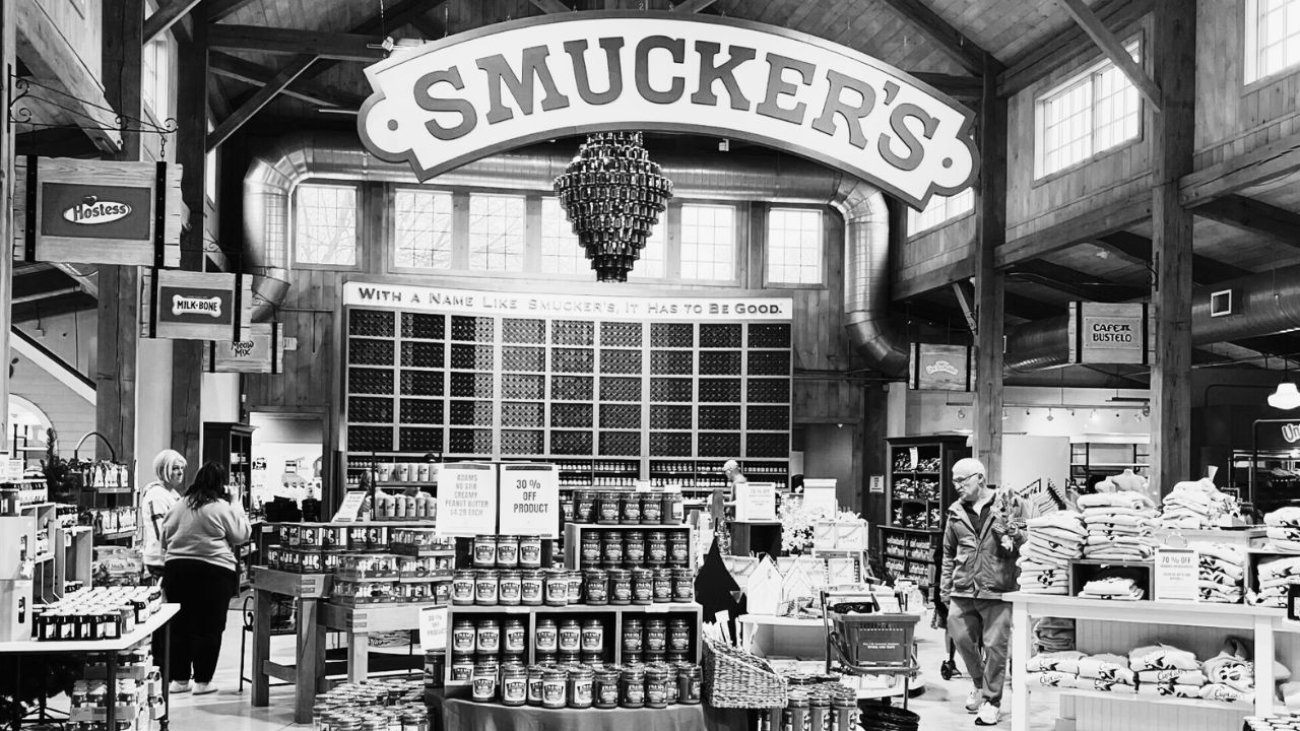
Smucker’s operated a retail visitor store in Orrville, Ohio — a tourist-facing shop near its headquarters. That store closed, and a YouTube video documenting its final days spread widely online.
This was a consumer retail outlet, not a corporate facility. Its closure has no bearing on the company’s operations. But visually, it looked like a shutdown, and that image stuck.
The Indianapolis Hostess Plant Will Close in 2026
Smucker announced that its Hostess snack cake manufacturing plant in Indianapolis will close in 2026, ending nearly 70 years of operations at that location. The plant is expected to be sold by the end of that year.
Importantly, Smucker has stated that production will shift to other facilities. Hostess products are not being discontinued — they’re just being made somewhere else. This is a consolidation move, not an exit from the snack cake business.
The Ripon, Wisconsin Plant Was Closed and Sold
Smucker also closed and sold a manufacturing facility in Ripon, Wisconsin. Production from that plant was moved to the Orrville facility. Again, this is a consolidation decision aimed at efficiency, not a sign that the company is winding down.
The Baking Business Was Sold
Smucker sold its U.S. baking business — which included brands like Pillsbury, Martha White, and Robin Hood — to Brynwood Partners for $375 million. Those brands didn’t disappear. They changed owners.
This is a standard portfolio move for large food companies. Smucker decided that baking mixes weren’t core to its long-term strategy, took the cash, and moved on.
Natural and Organic Brands Were Divested
Smucker also sold its natural and organic beverage and grains businesses — including R.W. Knudsen and Santa Cruz Organic licensing — to Nexus Capital for $110 million. A related plant in Ripon was part of that deal.
These were smaller, lower-margin categories. Selling them follows the same logic: focus on what drives the most value, exit what doesn’t.
Each of these decisions is a targeted business move. None of them, individually or together, signals that the company is failing.
The Hostess Acquisition and Why It Has Not Gone Well
This is the part of the story that deserves the most attention, because it’s the most significant financial issue the company is facing right now.
In 2023, Smucker acquired Hostess Brands for approximately $5.4 billion. The idea was straightforward: sweet baked snacks are a large, popular category, and Hostess had strong brand recognition. It looked like a growth play.
It has not played out that way. The Sweet Baked Snacks segment has posted double-digit sales declines. In one reported quarter, sales were down roughly 19% to around $256 million, and even after excluding divested brands, the segment still declined. Profit in the division dropped by nearly 70–72%.
Smucker has also taken nearly $2 billion in impairment charges tied to the Hostess acquisition. That means the company has had to write down the value of what it paid for, acknowledging that Hostess is worth significantly less than the purchase price suggested.
Management has pointed to inflation, integration challenges, and execution problems. The honest read is that the company overpaid, the integration was messy, and consumer demand didn’t hold up the way they projected.
That’s a serious problem. But it’s a problem in one segment of a larger business — not a company-wide collapse.
What the Financials Actually Show
Smucker’s profits are under pressure. The company’s guidance for fiscal 2026 shows adjusted earnings per share in the range of roughly $8.50 to $9.50, compared to approximately $10 in prior years. That’s a meaningful decline.
The company has also announced layoffs as part of broader cost-cutting efforts. Shifting consumer behavior, competition from private-label products, and margin pressure across the packaged food industry have all played a role.
Still, the company expects positive earnings. It’s managing a broad portfolio that includes coffee and pet food — two categories where it has stronger footing. Those segments offset some of the damage from Hostess.
A company facing profit declines and impairment charges is not automatically heading toward bankruptcy. Plenty of large businesses go through painful restructuring cycles and come out the other side. Smucker is in a difficult period, not a death spiral.
What This Means for Consumers, Employees, and Investors
For Consumers
Smucker’s jams, Jif peanut butter, Folgers, and Hostess snack cakes are not disappearing from store shelves. Production of Hostess products will continue from other facilities after the Indianapolis plant closes. The brands you buy regularly remain part of the company’s core lineup.
Some niche products — particularly in the natural and organic space — were sold to other owners. You may still find them under different company ownership.
For Employees
Plant closures in Indianapolis and Ripon have real consequences for the workers and communities involved. These are not abstract business decisions — they represent job losses in specific places.
Large food companies typically frame these moves as efficiency improvements or consolidation into more modern facilities. That may be accurate from a financial standpoint, but it doesn’t make the impact easier for affected workers.
For Investors
The Hostess impairment charges and declining EPS guidance are legitimate concerns. Investors should watch how the company manages the Hostess segment going forward, whether coffee and pet food can carry the portfolio, and whether cost-cutting actually improves margins.
For practical guidance on reading business restructuring news — and understanding what it actually means for a company’s future — Next Business Tips covers these kinds of business fundamentals in plain language.
How to Tell If a Company Is Actually Going Out of Business
This situation is a good reminder of how to read business headlines clearly. When you see news about a company “closing,” ask yourself:
- Is it a single store or retail location closing?
- Is it one manufacturing plant among many?
- Is the company selling a brand or product line — and does that brand still exist under a new owner?
- Or is this a bankruptcy filing, liquidation announcement, or confirmed shutdown of the entire business?
These are very different situations. A company store closing in Ohio is not the same as The J.M. Smucker Company filing for Chapter 11. Treating them the same leads to unnecessary panic — and bad decisions for consumers, employees, and investors alike.
Also Read: